
Differentiation Isn't a Feature List: Using Playing to Win to Operationalize Porter in a Rural Hospital
There is a familiar exercise that plays out in hospital boardrooms across rural America. A consultant or a new CEO gathers the leadership team and asks what makes the hospital different. The flip chart fills up quickly: we know our patients by name, we have great nurses, we're committed to the community, we offer compassionate care, we're investing in technology, we're recruiting new specialists. Everyone nods. The list goes into the strategic plan. A year later, margins are worse, the regional system across the county line has bought another physician practice, and nobody can quite explain why the strategy isn't working.
The reason is that almost nothing on that flip chart is strategy. It is, in Michael Porter's terms, a description of operational effectiveness wearing strategy's clothes. And it is precisely the trap that independent rural hospitals fall into when they try to compete with regional systems by becoming smaller, friendlier versions of them.
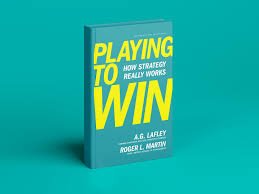
This post is about how to escape that trap. It combines two of the most useful frameworks in modern strategy, Michael Porter's 1996 essay What Is Strategy? and A.G. Lafley and Roger Martin's Playing to Win (2013), and applies them to one of the hardest strategic environments in American business: the independent rural hospital. The focus throughout is on differentiation, because differentiation is where Porter is sharpest, where rural hospitals are most confused, and where the combination of these two frameworks does its best work.

The A3 Approach - A Practical Guide to Strategic Documentation in Healthcare
Organizations face unprecedented challenges that demand focused strategic responses. Yet many healthcare institutions struggle with strategic clarity—developing plans that are unwieldy, difficult to communicate, and even harder to implement effectively. The A3 methodology offers a powerful solution to this common challenge.
Originally developed by Toyota as part of their lean management system, the A3 approach has found remarkable resonance in healthcare settings. Taking its name from the international paper size (11x17 inches) that serves as its canvas, this methodology constrains strategic documentation to a single page—forcing clarity, precision, and prioritization.

The “Strategic Parking Lot” - Managing Future Initiatives While Maintaining Focus
Organizations face a constant stream of new ideas, opportunities, and potential projects. While innovation and forward thinking are essential for growth, attempting to pursue too many initiatives simultaneously often leads to diminished results across the board. This creates a fundamental tension: how can organizations maintain laser focus on current strategic priorities while ensuring valuable future opportunities aren't lost?
Most organizations have a set of primary initiatives that demand significant resources, executive attention, and cross-functional collaboration. These initiatives typically represent the organization's most important strategic priorities and require sustained focus to execute successfully. However, during the execution of these critical initiatives, new ideas continuously emerge. Some arise from market changes, others from customer feedback, and still others from internal innovation. Each may hold tremendous potential value, yet adding them to an already full plate risks diluting focus and compromising overall execution.

Market Position Assessment in Healthcare - A Strategic Framework
Understanding your organization's market position is essential for sustainable growth and operational excellence. A comprehensive market position assessment provides healthcare leaders with critical insights to develop effective strategies, improve patient outcomes, and gain competitive advantage.

The Complete Strategy Playbook: Combining Competitive Analysis with Strategic Choice
Strategy development becomes clearer and more powerful when you combine competitive analysis with structured decision-making. By merging Porter's insights about competition with Lafley/Martin's practical framework, organizations can create strategies that are both distinctive and actionable.

Cascade of Choices - Understanding the Five Essential Questions of Strategy
Strategy doesn't have to be mysterious or overwhelming. At its core, strategy is about making specific choices to win in the marketplace. A.G. Lafley and Roger Martin present a clear framework built around five essential questions that form what they call the Strategic Choice Cascade.