
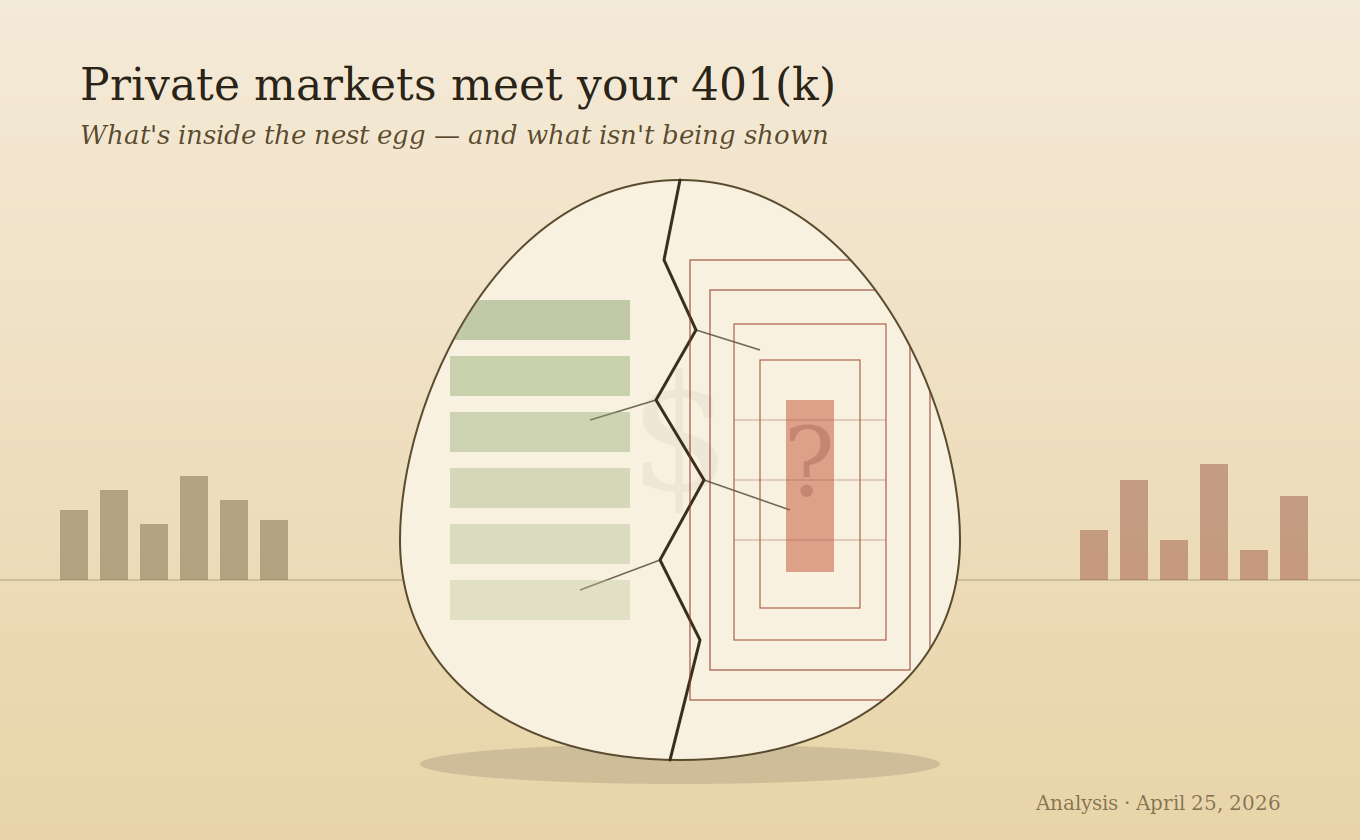
Private Markets and Your 401(k) - What You Need to Know Right Now
Washington just proposed opening your 401(k) to private equity and private credit. Supporters say it will give ordinary workers access to returns that have long been reserved for the wealthy. Critics say it will expose retirement savers to opaque, illiquid, and overvalued assets at the worst possible moment. Both sides have a point. This piece tries to lay out what each side gets right, what each side omits, and what you would need to know to make an informed decision if these options show up in your retirement plan.
HOW WE GOT HERE
The private credit market grew from a niche corner of finance into a $1.8 trillion industry over the past decade, fueled by low interest rates, a shrinking universe of public companies, and banks retreating from leveraged lending after post-2008 regulation. Firms like Apollo, Blackstone, Ares, and Blue Owl stepped into the gap, making high-interest loans to private equity-backed companies — many of them software businesses — and offering wealthy individuals access to yields unavailable in public markets.
For a long time, it worked well. Private equity returned 15.1% annually on average between 1984 and 2024, versus 11.7% for the S&P 500. University endowments like Harvard's put 77% of their portfolios into private and alternative investments. Government pension funds allocated roughly a third of their assets to alternatives. The returns were real, and the institutions that earned them were sophisticated, long-term investors with professional staff and full transparency into what they owned.
That context matters for everything that follows.

The Critical Role of External Benchmarking in Healthcare Employee Engagement
The pursuit of excellence in healthcare delivery fundamentally depends on engaged employees who are committed to providing outstanding patient care. While many healthcare organizations diligently track their employee engagement metrics from year to year, an internal-only focus can create a significant blind spot in understanding true organizational performance. External benchmarking serves as a crucial tool for healthcare providers to accurately assess and improve their employee engagement initiatives within the broader industry context.
Internal metrics, while valuable for tracking organizational progress, present an incomplete picture when viewed in isolation. A healthcare organization might observe a steady upward trend in its engagement scores and conclude that its initiatives are successful. However, this conclusion could be misleading without the context of industry-wide performance. If peer organizations are experiencing more substantial improvements, what appears to be progress might actually represent a declining competitive position in the talent marketplace.
External benchmarking transforms engagement data into actionable intelligence by providing essential context for performance evaluation. This context becomes particularly vital in healthcare, where organizations compete for talented professionals in an increasingly challenging labor market. When a hospital sees its engagement scores improve from 75% to 78%, this achievement takes on different significance if the industry average has moved from 74% to 80% during the same period. What initially appeared to be progress might actually signal a widening gap between the organization and its competitors.

Healthcare Workforce Engagement Patterns and Indicators
The landscape of healthcare employee engagement presents a complex intersection of workforce satisfaction, patient care quality, and organizational success. At its foundation lies trust - between colleagues, between staff and leadership, and between healthcare providers and patients. Employee engagement surveys serve as crucial diagnostic tools within healthcare institutions, providing measurable insights into workforce health, organizational culture, and the strength of these trust relationships.
These surveys' significance extends beyond basic job satisfaction metrics. In healthcare environments, where patient outcomes directly correlate with staff performance, engagement surveys reveal critical patterns in care delivery quality. Evidence consistently shows that engaged healthcare workers, operating in environments of mutual trust, deliver superior patient care, maintain higher safety standards, and contribute to improved patient satisfaction scores.

Boosting Employee Engagement in Healthcare: Strategies for Responding to Metrics That Need Improvement
Employee engagement in healthcare isn’t just a buzzword—it’s a vital component of delivering high-quality patient care and maintaining a thriving organization. However, understanding and responding to engagement metrics that reveal areas of concern can be challenging. In this post, we’ll explore how to interpret these metrics effectively and take meaningful action to create a positive, supportive environment for healthcare professionals.
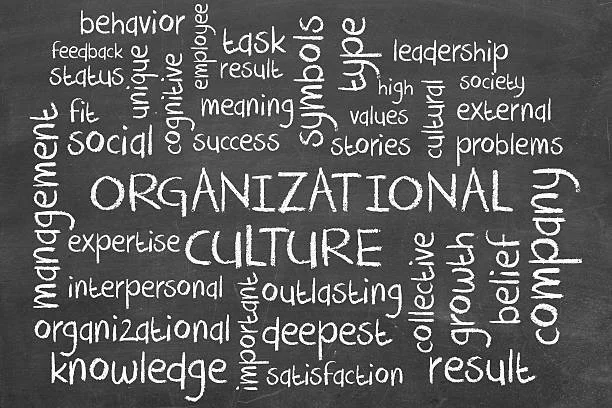
Best Practices for Cultivating a Strong Organizational Culture
Fostering a strong organizational culture is a competitive advantage and a key factor in driving employee engagement, patient satisfaction, and operational success. A thriving culture doesn’t happen by accident; it is cultivated through intentional leadership and active participation from all levels of staff. This blog explores two critical themes: (1) how consistent leadership expectations, guided by evidence-based practices, can create an environment where staff excel, and (2) the importance of gathering input from staff on the organization’s future, fostering a culture of inclusion and ownership.

The Power of Organizational Culture: How Strong Culture Elevates Staff Relationships and Patient Care
In healthcare, we often focus on clinical outcomes, patient satisfaction scores, and operational efficiency. But beneath these metrics lies something fundamental to every hospital’s success: its culture. A strong organizational culture isn’t just a buzzword—it’s the very foundation that supports positive staff relationships and enhances the quality of care patients receive.
When a hospital or healthcare organization fosters a healthy, supportive culture, the effects ripple through every aspect of the organization, from staff morale to patient outcomes. In contrast, when culture is neglected, even the best clinical practices can falter under the weight of disconnection and discontent.