
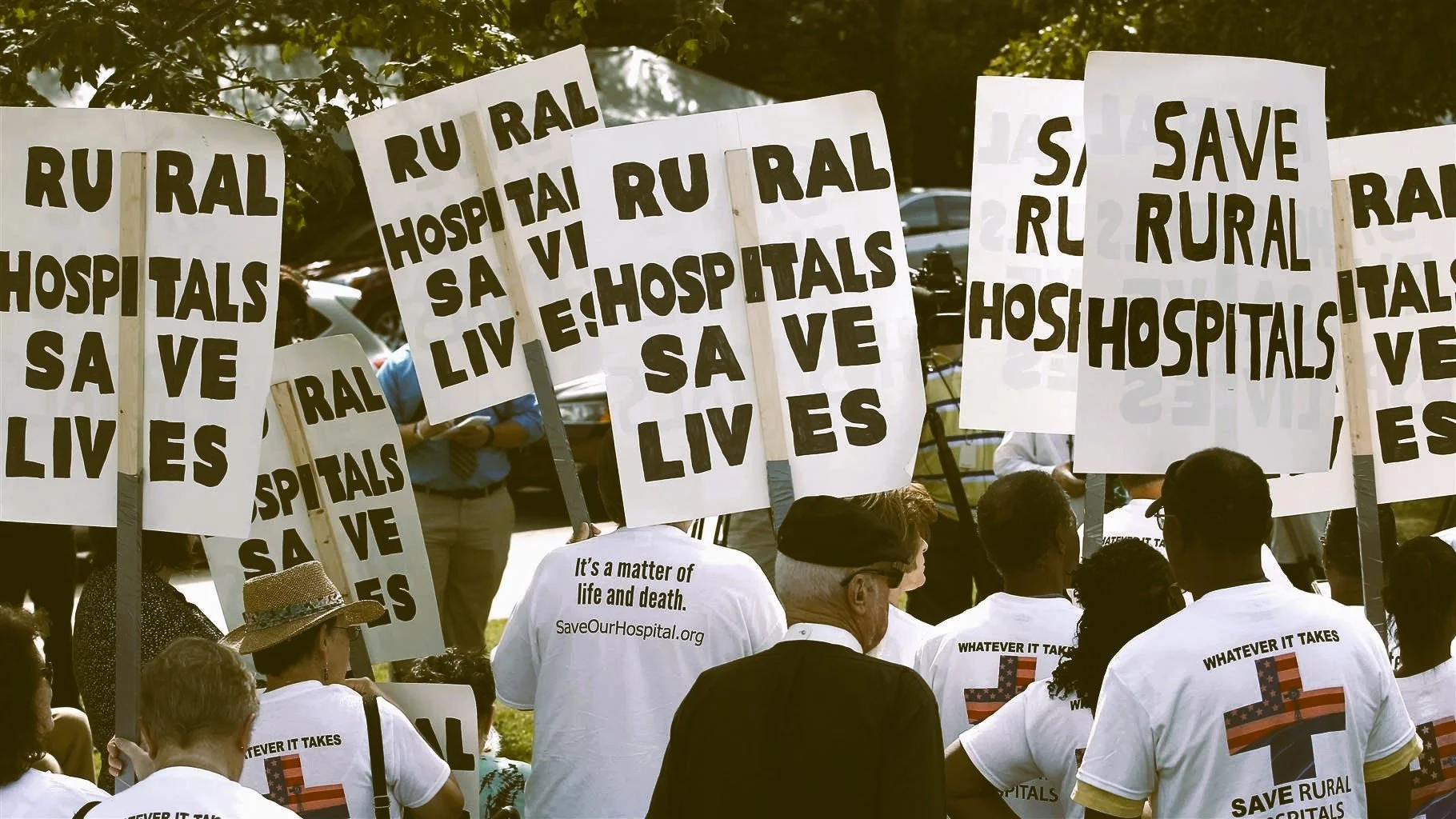
2025 Rural Healthcare Year in Review - When Rhetoric Met Reality
The year 2025 will be remembered as the moment rural healthcare advocates learned to read between the lines of political theater. It began with Robert F. Kennedy Jr.'s confirmation hearings for HHS Secretary, where nearly every senator—Republican and Democrat alike—stressed the critical importance of preserving healthcare access and coverage in rural America. It ended with rural hospitals facing the largest federal healthcare cuts in Medicaid's history, a marketplace subsidy cliff that may never be resolved, and a "transformation grant" that delivers a fraction of what the rhetoric promised.
The question we must ask: Do the policies enacted in 2025 support the narrative presented during Kennedy's confirmation, or do they expose it as empty posturing?

The $100,000 H-1B Fee - A Policy That Undermines American Competitiveness
The recent decision to impose a $100,000 fee on new H-1B visa applications represents a fundamental misunderstanding of how global talent drives American economic success. While framed as protecting American workers, this policy will likely harm both American competitiveness and the very workers it claims to help.
America's dominance in technology, healthcare, and innovation has been built on a simple principle: attract the world's best talent and let them create value here. This policy abandons that winning strategy for a fundamentally flawed premise that high-skilled immigration is a zero-sum game. The $100,000 fee effectively transforms H-1B visas from a workforce tool into a luxury good. For a medical resident earning $55,000 annually, no hospital will rationally pay twice their salary just for the privilege of hiring them. For a brilliant recent PhD who might revolutionize artificial intelligence or develop life-saving treatments, the fee creates an arbitrary barrier that has nothing to do with their potential contribution to America.